The Founder-Brand Playbook of 2026: What Dua Lipa, Emma Grede and Poppi Tell Luxury
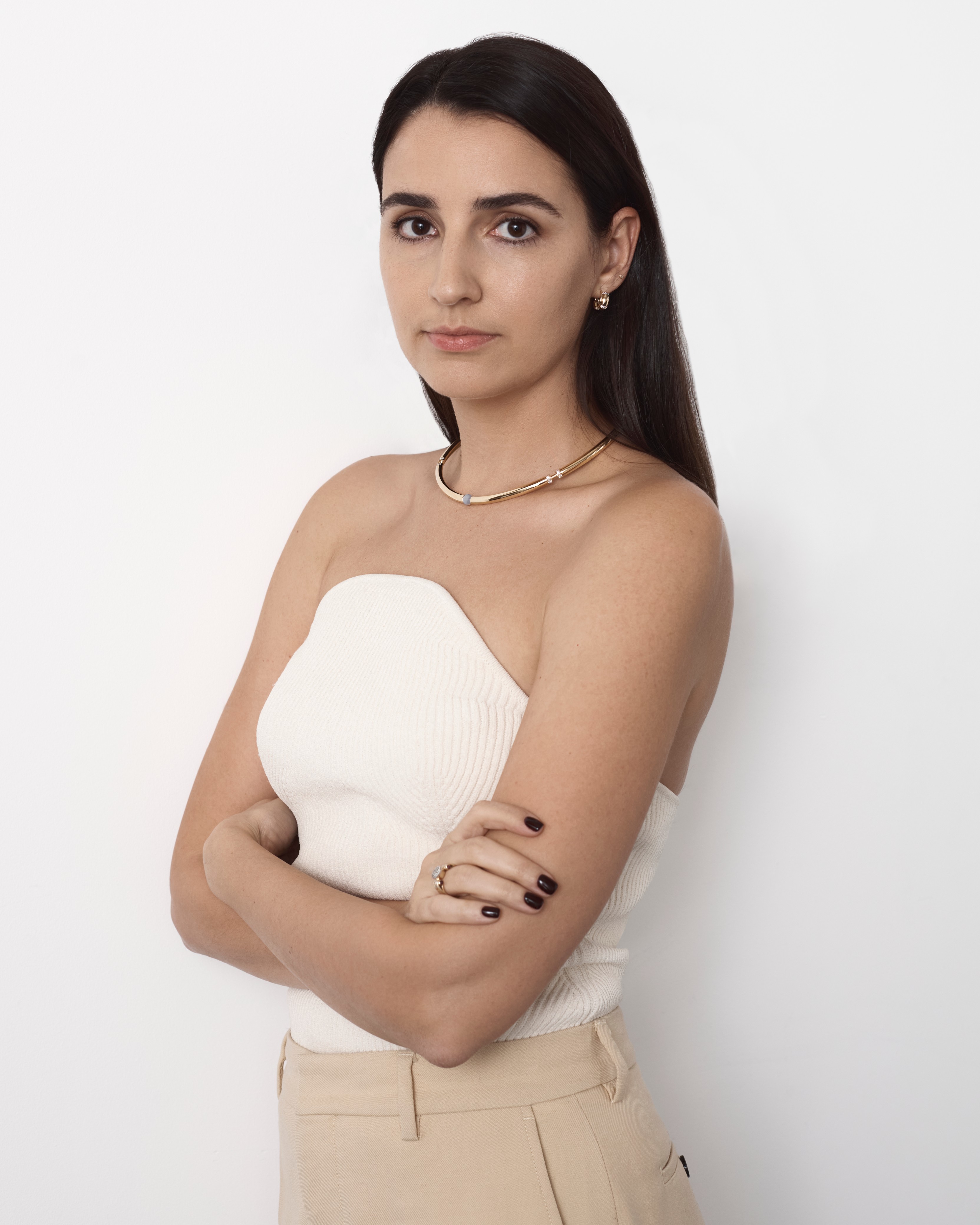
Ex-LVMH, Dior, Aura Blockchain Consortium · Published June 2026
Dua Lipa married Callum Turner in a civil ceremony at Old Marylebone Town Hall on May 31, 2026. The couple held a three-day celebration in Palermo, Sicily, from June 5 to 7 — custom Bottega Veneta gown, archival-inspired Bulgari high jewellery including a Tubogas Manchette watch drawn from a 1974 design, multiple outfits across two locations, fully choreographed press rollout.
The wedding ran across the fashion press for the week. What ran alongside it, though it should have been read together, is the deliberate five-year business-building project she has been operating underneath the global tours, the Riviera photographs, and the curated public image of permanent ease.
The Dua Lipa portfolio, in order
Five ventures, each with a clear strategic purpose:
Service95 (2022) — an editorial newsletter, podcast, and book club, announced in November 2021 with the first issue published February 3, 2022. An independent media property, with no social platform middleman taking a cut. Service95 covers culture, books, travel, music. Owning a media channel directly, rather than depending on Instagram or TikTok, is unusual at her career stage.
Frame Fitness (2025) — co-founder and chief creative officer of an at-home Pilates reformer company, alongside founder Melissa Bentivoglio. Announcement was September 22, 2025. The business sits inside the wellness category, where her personal aesthetic has commercial reach.
Augustinus Bader x Dua Lipa (DUA) (November 2025) — co-founder of the brand's new lower-price skincare line. Three products priced $40 to $80 powered by Augustinus Bader's TFC5 technology, designed for younger consumers (ages 18 to 35). A category co-creation rather than a celebrity endorsement, designed to widen Augustinus Bader's audience without diluting the parent brand.
Nespresso (April 2026) — global brand ambassador, fronting the "Vertuo World" campaign that launched April 14, 2026. Nespresso called it "by far the biggest campaign that we've ever done in our 40-year history."
A concurrent multi-house ambassador portfolio. Beyond the four ventures above, Dua Lipa is currently an ambassador for at least four major luxury houses at once: Chanel (the Chanel 25 bag, designed by Matthieu Blazy in his new role at the house), Bulgari (global brand ambassador since February 2026, LVMH), YSL Beauty (Kering), and Bottega Veneta, whose custom wedding dress by Louise Trotter she wore for the welcome party. The houses she works with span both LVMH and Kering, two competing groups. Her wedding had Bottega (Kering) and Bulgari (LVMH) on the same person on the same weekend.
The wedding itself was the latest chapter in the same project — staged, dressed, and rolled out to press with the discipline of a fashion campaign rather than a private event. The "always on holiday" public image is the surface layer; the four operating businesses, the editorial property, and the concurrent multi-house ambassador portfolio are the underlying structure.
The pattern is not unique to her
The model Dua Lipa is running has cross-category equivalents — inside luxury (Amina Muaddi) and outside it (Emma Grede, Allison Ellsworth).
Amina Muaddi
Muaddi is the founder of the eponymous luxury footwear and accessories brand. In late May / early June 2026 she celebrated her birthday on Île de Bendor, a newly revitalised private island off the coast of Bandol in the south of France, hosting a multi-day star-studded getaway at the newly opened Zannier Île de Bendor resort, which reopened in May after a substantial transformation. The guest list included models and actors such as Laura Harrier and Vittoria Ceretti. Activities across the days included beach club gatherings, boat rides, waterfront DJ sets, and styling sessions.
The birthday was simultaneously a private celebration and a multi-day brand activation — for Muaddi's own house, for the Zannier resort hosting it, and for every brand that dressed or styled the guest list during the trip. Each celebrity guest produced multiple content moments. The format is now familiar: a personal life event designed and rolled out as a multi-platform brand campaign, with the founder herself as both the host and the central figure of the brand.
Emma Grede
Grede is CEO and co-founder of Good American (with Khloé Kardashian), founding partner of Skims (with Kim Kardashian), and co-founder of Safely (cleaning products, with Kris Jenner). In April 2026 she published her first book, Start With Yourself: A New Vision for Work & Life, through Avid Reader Press / Simon & Schuster. It became an instant New York Times bestseller.
The book is not separate from the businesses. It codifies the operating approach behind Good American, Skims and Safely into a sellable artefact, extends her personal brand into the publishing category, and gives her a global media tour as the marketing engine. The launch ran across business press, lifestyle press, and her own social channels in a coordinated rollout.
Allison Ellsworth and Poppi
Ellsworth co-founded Poppi, the prebiotic soda brand, in 2020. In 2025, PepsiCo acquired the company for $1.95 billion. The strategy from the start was TikTok-first and creator-network-led. Poppi was one of the first beverage brands to commit fully to the platform — by acquisition the brand had over three billion TikTok views — and the strategy was anchored in continuous seeding to between three and five thousand content creators a year, plus the founder herself posting regularly as the brand's primary voice.
Ellsworth's own three-C framework — culture, community, creative — describes a brand built without traditional advertising agencies, where the founder is the visible front of the brand and content creators are the distribution engine. PepsiCo's post-acquisition strategy, per the CEO's public statements, is to keep her in the founder role and "let Poppi be Poppi" — a recognition that the brand depends on her continued visibility.
What these three have in common
Three observations across the cases:
The brand is the person. Though "founder" does not quite fit all four cases. Dua Lipa is co-founder of three ventures but her primary identity is cultural figure. Emma Grede, Allison Ellsworth and Amina Muaddi are literal founders who also operate as cultural figures. Founder, creator, cultural figure, KOL, principal — each word captures part of what these people are and misses something. Whichever fits closest, the brand identity and the personal identity are the same identity. Service95 only works because of Dua Lipa specifically. Good American resonates the way it does because Emma Grede has built her own public credibility as an operator. Poppi went viral because Allison Ellsworth was a credible voice on TikTok in 2020 when few founders were posting at all.
Personal moments are brand moments. A wedding, a book launch, a Super Bowl ad, an at-home Pilates session, an Instagram post in Sicily: each one is a brand activation, planned and rolled out as such. The line between personal life and brand strategy has been deliberately erased, not blurred accidentally.
Content creators are the distribution model. Poppi seeds to three to five thousand creators a year. Dua Lipa runs her own media (Service95) and every public appearance becomes content that others amplify across platforms. Emma Grede launched her book through a coordinated network of business and entertainment figures she has built personal relationships with over a decade. The corporate "agency-led brand campaign" has been replaced by founder-direct content plus creator network amplification.
The question for luxury houses
Most major Maisons no longer have a founder figure at the helm. The Hermès family is the visible exception, and Brunello Cucinelli is one of the few remaining founder-led brands at scale in luxury. Most of the rest operate on the creative-director model: the CD becomes the brand's public identity for a tenure, then leaves, and the brand resets.
The CD turnover of the last 24 months has made the limits of that model visible. Chanel has Matthieu Blazy. Dior has Jonathan Anderson. Bottega Veneta has Louise Trotter. Balenciaga has Pierpaolo Piccioli. Gucci has Demna. Each of these transitions involves a real risk of breaking the brand-customer relationship that the previous CD built, and the houses have to invest in rebuilding it from a near-cold start.
The Dua Lipa – Bottega Veneta relationship survived this turnover, three times. Because the relationship was never with Daniel Lee, Matthieu Blazy, or Louise Trotter. It was with Bottega the brand, mediated by her continued visible loyalty to it.
For luxury Maisons, the practical takeaway is not "appoint a founder." Most do not have that option. The takeaway is to think hard about what fills the founder role inside the brand-customer relationship. Is it the heritage of the house itself, expressed consistently through every CD's interpretation? Is it the stable of long-term celebrity ambassadors, treated as multi-decade relationships rather than season-to-season deals? Is it the clienteling discipline of the store team, which the client experiences directly regardless of who is designing the collection that season? Is it the editorial voice the brand maintains across channels?
These are the assets that survive a creative-director change. They are also the assets most luxury houses underinvest in relative to the creative-director appointment cycle.
The model is portable. The question is whether luxury wants to apply it.
Dua Lipa, Emma Grede, and Allison Ellsworth are not luxury founders. The categories they operate in — beverages, intimates, beauty, skincare, media — are mostly mass or premium, not luxury. But the playbook they share is portable. The brand is the person, the person is operating multiple businesses in coordination, content creators carry the distribution, and personal moments are designed and rolled out as brand campaigns.
This is not an argument against creative directors. At the scale of Dior or Chanel, the CD's role is to add their touch and refresh the cultural moment while respecting what sits underneath them — millions of clients, decades of brand equity, a global distribution machine. They cannot, and should not, go too far. The CD interprets the house. The underlying brand-customer relationship has to live somewhere bigger than any single tenure can hold.
For luxury houses, the question is whether the next decade of brand-customer relationships will be built on the same anchors as the last decade — a creative director, a heritage story, a flagship boutique — or on something more durable that survives the inevitable creative-director changes ahead. The houses that think about this now, while the wave is still building outside luxury, will have the head start. The ones that wait for it to land inside their own category will be rebuilding from a near-cold start.