Luxury at Half-Time 2026: The Quiet Pivot to Retention
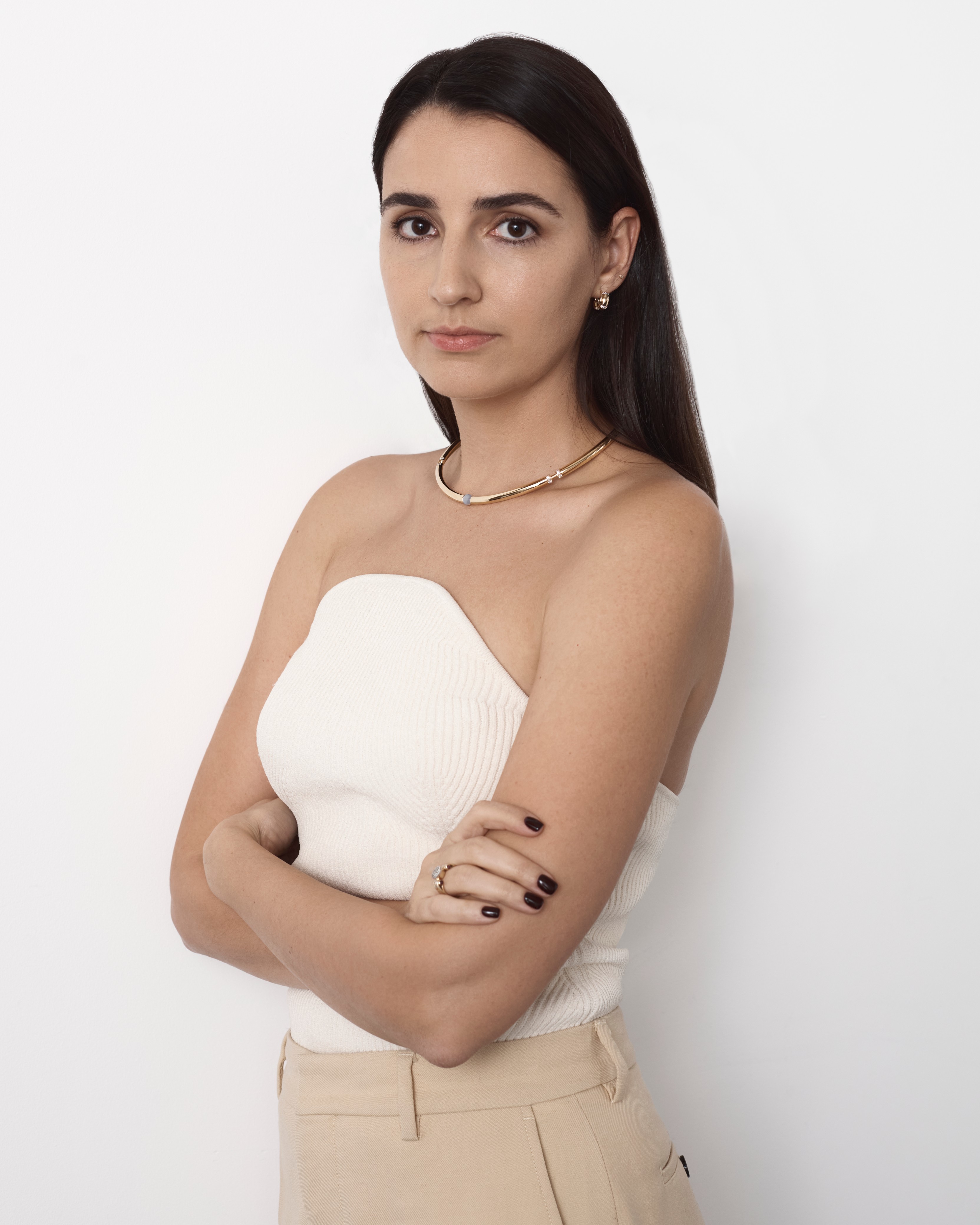
Ex-LVMH, Dior, Aura Blockchain Consortium · Published June 2026
Cannes wrapped up in late May with the usual procession of Maisons on the red carpet — Chopard, Boucheron, Cartier, Saint Laurent, Dior. Victoire de Castellane unveiled Dior's new high jewellery collection, Diorissima, at the Palazzo del Casinò on the Venice Lido. Dua Lipa married Callum Turner over a three-day extravaganza in Sicily on 5–7 June, wearing custom Bottega Veneta by Louise Trotter for the welcome party and archival Bulgari high jewellery (including a Serpenti Pallini watch reported at around $500,000 and a Serpenti choker) across the events — visible cross-group wins for Kering and LVMH on the same weekend. Hermès continued to post the kind of growth no other major luxury group has matched this year, and Richemont closed its full year with the jewellery houses outperforming the rest of the portfolio. From the outside, the H1 2026 luxury surface looked like business as usual.
Inside the same six months, Kering produced the most concentrated set of structural changes to how a major luxury group thinks about client relationships in a decade — three new C-level appointments, a new commercial division built around jewellery, fresh Group-level Centres of Excellence, and an explicit mandate to treat retention rather than acquisition as the central commercial problem. LVMH and Richemont responded to the same underlying market pressure in different ways. The work in each group is happening below the line of what gets photographed at Cannes, and it is the part that will define which houses come out of this cycle in better shape than they went into it.
The macro picture explains why. The Business of Fashion, drawing on Bain analysis, reported in May 2026 that the industry has lost roughly 50 million customers over the past three years, with the global luxury customer base falling from around 400 million to around 350 million. At the same time, the share of luxury revenue concentrated in the very top of the client pyramid has continued to grow. The customer base shrank, dependence on top-tier clients deepened, and retention became the cleanest growth lever available.
The structural response — visible across groups
Kering moved first and most visibly. In January, Daniele Zito was appointed Group Chief Commercial Officer — the first time the function unified retail, e-commerce and wholesale at group level. In April, Stéphane Noël joined as Group Chief Industrial Officer. In May, Carlo Mocci became the group's first Chief Client Officer, reporting directly to CEO Luca de Meo, with a mandate to build “the luxury industry's most advanced client intelligence platform.” Three new C-level seats in five months, all wrapped into de Meo's ReconKering plan unveiled at the Capital Markets Day in Florence in April. Two new Centres of Excellence — Industry and Client — sit underneath.
The Mocci role is structurally new: no major luxury group has previously created a Group Chief Client Officer position at this level of seniority, reporting directly to the CEO. The closest precedents for the role sit in tech and financial services rather than in luxury, and Mocci's own background — McKinsey, Amazon Europe, Chief Business Officer at Deliveroo — signals that Kering looked outside the industry for someone who has actually built client-data infrastructure at scale.
Richemont's H1 2026 was the structural counter-example. The group's full-year results to March 31, 2026, announced in mid-May, showed the Jewellery Maisons continuing to grow while the Specialist Watchmakers division remained under pressure, with Cartier and Van Cleef & Arpels carrying the overall result. The pattern that emerged was clean: businesses built on long client relationships tend to outperform fashion-cycle businesses, especially when macro conditions tighten. Richemont has not needed to appoint a Chief Client Officer because Cartier and Van Cleef have been operating on a retention-led model since they were founded — clients followed for years by the same Sales Associate, multi-generational families managed through dedicated client-manager structures, high-jewellery sales built across years of trust rather than across single transactions. There is a reasonable reading in which the discipline Kering is reaching for at the Group level — through Mocci, through the new Centres of Excellence, through the jewellery division — resembles what Cartier and Van Cleef have long practised at the house level, even if Kering has not framed its own ambitions in those exact terms.
LVMH's H1 response was less institutional and more experiential. The Diorissima high jewellery launch at the Palazzo del Casinò on the Venice Lido — 141 pieces presented by Victoire de Castellane across botanical, underwater and celestial themes, through a private cocktail, gala dinner and fashion show — was among the most-covered Maison moments of the season, and a clear example of the kind of high-touch, high-cost client moment that defines the Group's current investment pattern. Tiffany's repositioning under LVMH has continued to broaden the brand's high-jewellery base. The investment is going into experience and access, which, based on the spending behaviour Bain tracked through 2024 and 2025, were among the few categories still growing meaningfully among top-tier clients.
Hermès, as it has for the better part of a decade, just kept doing what it has always done — another strong quarter of growth on a retention-led model that the rest of the industry has not figured out how to replicate. The Birkin wait list, often described as a marketing curiosity, is in commercial terms a deliberately rationed access mechanism: clients earn the right to buy the bag through years of purchase history at the brand and a long relationship with their store, and the bag is offered to them rather than asked for.
Looked at side by side, the Diorissima gala and the Birkin wait list run on the same underlying mechanic. Being invited to the Venice Lido event meant being part of the client tier that will also be invited to the next high jewellery launch. Being offered a Birkin means you have already built the purchase history at Hermès that makes the next offer possible. In both cases, past purchases qualify you for future access. Continue buying, stay in the system. Stop buying, or buy elsewhere, and you lose your place. It is, broadly, the same kind of discipline — depth of client history acting as a precondition for what is offered, when, and to whom — that a Group Chief Client Officer role of the kind Kering has created could in principle help other houses operationalise at scale, though Kering itself has not stated that as the explicit reference model.
What “client intelligence” actually means
The phrase is doing a lot of work in 2026 earnings calls. Beneath the term sit three layers that have been discussed in the industry for years, each of which different groups are now investing in to different degrees.
The first layer is client identity within the Maison. A unified client profile — purchases, returns, online browsing, in-store preferences and clienteling notes consolidated into one record per client — is already standard practice at most major luxury houses, although the quality and freshness of that consolidation varies enormously between brands. The investment a role like Mocci's represents is, among other things, an investment in making the house-level consolidation work more consistently across the Group's Maisons, with cleaner data, fewer manual handoffs between systems, and faster sync between channels.
The second layer is a personalisation system that runs on top of existing brand systems without flattening them. Each Maison has a distinct relationship with its clients, and the infrastructure has to support shared visibility and shared signals without forcing creative or commercial uniformity across houses. The hard part is keeping each Maison's house intact while the foundations underneath get rebuilt; the technology, by comparison, is the easier piece.
The third layer is AI applied where it changes outcomes for the client and for the Fashion Advisor — automated triggers based on actual client behaviour, predictive recommendations grounded in purchase history, agentic tools that reduce the manual workload of clienteling. Most luxury houses that have invested in this so far have done it brand by brand. Kering's recent announcements suggest an intent to coordinate this work at Group level, although the operating detail of how that coordination plays out across Maisons has not yet been made public.
The leading indicator inside luxury
The clearest signal of where this is heading sits inside the H1 numbers themselves: the segment-level performance gap. Boucheron's Q1 2026 was up 22 percent on a comparable basis, leading the new Kering Jewelry division on growth, while Gucci was down 14 percent reported. The difference between the two is more structural than creative — a Boucheron client buying high jewellery at 26 Place Vendôme enters a multi-year, multi-purchase relationship that does not unwind in a single quarter when consumer sentiment shifts, while a Gucci client buying a leather bag or a ready-to-wear piece is far more exposed to fashion-cycle volatility. Jewellery as a category sits on the kind of long-cycle client relationship that several major groups are now, in different ways, trying to bring back into their wider commercial models, though the form that takes will look very different at LVMH, at Kering, and at Richemont.
The political problem inside every group
The harder question is integration without homogenisation. Kering's own announcement of the new Jewelry division put it explicitly: “moving from four independent jewelers to one coherent, Group-wide activity, supported by the progressive integration of Raselli Franco Group, while fully preserving the creative autonomy of each House.”
That sentence describes the trade-off the Kering structural changes of H1 2026 are trying to manage — group-wide coordination on one side, Maison autonomy on the other.
A Group client intelligence platform that becomes a tool of homogenisation will hit institutional resistance from inside every Maison, because each house's commercial leadership tends to defend the singularity of its client relationships. Maison CEOs report into Brand Development or, increasingly, into newly-created divisional leadership (Jean-Marc Duplaix on Kering Jewelry, for example), while Maison Chief Commercial Officers run their own commercial agendas. Whoever leads a Group function — Mocci at Kering today, and, possibly, equivalent roles at other groups in the years to come — has the mandate, but the mandate does not run by itself. The platforms succeed only when the Maisons see something concrete in return: a consolidated view of each client's purchase history across the Group's houses, specific product suggestions to bring to the client's next in-store appointment, ready-prepared outreach templates the Fashion Advisor can personalise in two minutes rather than thirty, and noticeably less manual data entry between POS, e-commerce and CRM. Otherwise the platforms get partial adoption, the way many clienteling tools of the past decade did. Most of those tools went through real change-management investment by their houses — training, incentives, dashboards, internal communications — and most still ended up used inconsistently, with much of the actual client conversation continuing in parallel on WhatsApp and similar personal messaging channels, where Fashion Advisors find the speed and tone they need with their clients.
What to watch in the second half
Three things will tell us by the end of the year whether the H1 structural moves translate into H2 reality.
The first is whether LVMH or Richemont follow Kering with a Group-level Chief Client Officer appointment. The function is structurally new, and the second or third group to create it will play a meaningful part in shaping how the role is understood across the industry. Neither LVMH nor Richemont has, to date, signalled that this is part of their immediate roadmap — LVMH operates at a scale that frames its client-data problem differently, and Richemont's heritage houses already operate on long-cycle client relationships — and either group may well continue without ever creating the role. The question is genuinely open.
The second is which Maisons inside Kering go first on the Mocci platform, and what they get in return. Early integration partners tend to shape the architecture; the more resistant houses tend to end up with a platform built without their priorities in mind. Boucheron, given its current commercial momentum and the fact that the new jewellery division sits close to the centre of the platform conversation, is one plausible candidate to set the template, but the actual choice will only become visible later this year.
The third is whether the new tools reduce work or add work for store-level Fashion Advisors. Every CRM transformation I've seen succeed or fail has turned on this question. If the new tools make the daily clienteling job easier — pre-prepared client profiles, smarter outreach prompts, fewer manual data entries — adoption follows. If the platform asks Fashion Advisors to feed more data into a system they don't get value from, it sits underused.
Closing
Cannes 2026 was the moment of brand projection — the carpet, the gowns, the jewellery, the press loops. The work that will define which houses come out of the next 18 to 24 months in better shape is happening alongside it: the appointments at Kering, the experiential investments at LVMH (Diorissima on the Venice Lido being the most visible), the cross-group celebrity moment at the Dua Lipa wedding earlier this month, the jewellery-house outperformance at Richemont, and the long-standing client disciplines at Hermès that the rest of the industry has not figured out how to copy.
Luxury has been describing its retention problem since 2022. Kering's H1 2026 — three new C-level appointments, a new commercial division built around jewellery, and the new Group Chief Client Officer role under Carlo Mocci — is the first set of concrete structural moves a major group has made against that problem. Whether they actually land inside the Maisons over the next two years, or stay as roadmap, is the open question.
AI for Luxury — Free 3-Day Fast Track. How AI is reshaping luxury CRM, clienteling, and the client intelligence platforms that retention now depends on.
Start the free AI Fast Track →
Or apply for the next live workshop: How Luxury Brands Actually Hire →
Frequently Asked Questions
What is the structural pivot in luxury in H1 2026?
The first six months of 2026 produced a concentrated set of structural moves across luxury groups around client relationships rather than customer acquisition. Kering appointed Carlo Mocci as Group Chief Client Officer in May — the first major luxury group to create the role at C-level reporting to the CEO. Richemont's full-year results showed Jewellery Maisons continuing to grow on a retention-led model. LVMH staged the Diorissima high jewellery launch on the Venice Lido as a destination client moment. The pattern is consistent: investment is moving toward depth of relationship rather than breadth of audience.
Why is retention the central question in luxury now?
Bain's most recent global luxury study (reported by The Business of Fashion in May 2026) found that the industry lost 50 million customers between 2022 and 2024 — falling from 400 million to 350 million globally. The top 2 percent of luxury spenders now account for 45 percent of all luxury purchases, up from 35 percent in 2021. The customer base shrank. Dependence on top-tier clients deepened. Retention became the cleanest growth lever available.
What is a Chief Client Officer in luxury?
A Chief Client Officer is a C-level executive responsible for unified client identity across Maisons, channels and markets, the personalisation infrastructure that runs on top, and the AI applications that translate client signals into commercial actions. Carlo Mocci, appointed at Kering in May 2026, is the first such role at a major luxury group. He reports directly to CEO Luca de Meo, with a mandate to build the luxury industry's most advanced client intelligence platform.
Why are jewellery houses outperforming the rest of luxury?
Jewellery purchases are emotion- and occasion-led rather than trend-driven, which means they hold up better when consumer sentiment shifts. Jewellery clients also enter multi-year, multi-purchase relationships with their Maisons — the structural retention is built into the category. Boucheron grew Q1 2026 plus 22 percent comparable. Richemont Jewellery Maisons grew 13 percent. The pattern reflects what the rest of luxury is now rebuilding the infrastructure to copy.